

Preventing Hospital Readmissions with Implementation Science
Have you ever tried putting a puzzle together without looking at the picture on the box? Pieces are spread out everywhere. Some fit. Some almost fit. Others make you wonder if they belong to a different puzzle.
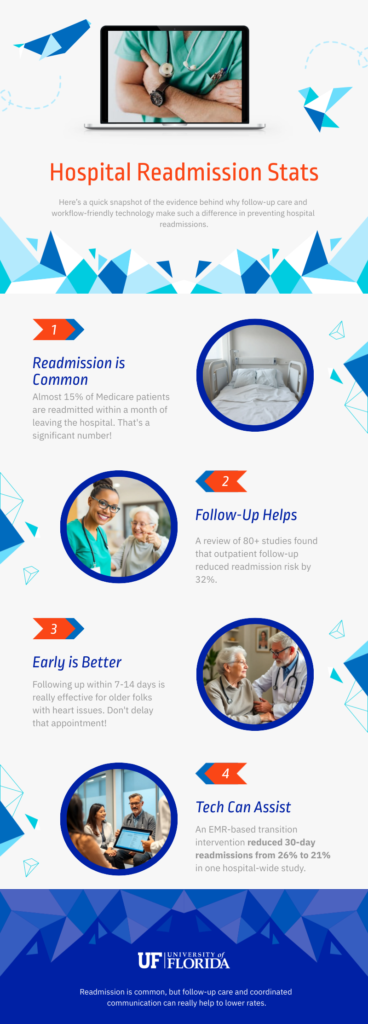
That’s what preventing hospital readmissions feels like. While almost 15% of Medicare patients are readmitted within 30 days, the path that leads them back is usually a series of small breakdowns in care that compound into a crisis.
We have plenty of good ideas for keeping people out of the hospital after they go home. Better follow-up. Clearer instructions. Medication checks. The pieces are there. But knowing where they go and how they function in different hospitals is a different matter. Implementation science gives us a broader perspective: the picture on the puzzle box that helps us guide the pieces into place.
For anyone curious about how this field works — or considering a future in it — reducing hospital readmissions is one of the clearest real-world examples you can learn from.
Why Hospital Readmissions Happen (And Why They’re Hard to Prevent)
A hospital readmission occurs when a patient returns within 30 days of going home. The cause is usually a lapse somewhere in their recovery— something small that snowballs into something significant. It might be:
- Not receiving clear instructions before discharge
- Mixing up medication schedules
- Missing follow-up appointments
- Everyday life getting in the way of recovery
The problem isn’t the lack of knowledge. Healthcare teams know what’s most effective: transitional care programs, early follow-ups and someone double-checking medications. These are proven strategies to reduce hospital readmissions.
But hospitals are busy. Staff are stretched. Patients have different needs and different home environments. A strategy that works beautifully in one place might fall apart in another.
4 Ways Implementation Science Prevents Hospital Readmissions
Implementation science is the process of turning tested improvements in healthcare into everyday practice. It asks a simple question: How do we make this work for real people, in real settings, with real constraints?
For readmission prevention, an implementation scientist might:
- Shadow nurses during the discharge process
- Observe how medication lists are transferred from one team to another
- Interview patients about what was confusing
- Map out where information gets lost between the hospital and the clinic
After observing these different areas of the discharge process, implementation scientists ask questions like, “Where does this process falter, and how can I improve it?”
Then they fix it in a way that staff can sustain.
Once you’ve identified the gaps in your puzzle, it’s easier to see which pieces matter most. Here are four interventions that make the biggest difference in reducing hospital readmissions.
#1 Discharge Education
We know that educating patients can help reduce the number of readmissions. But not every patient learns the same way.
Some prefer written instructions. Some need visual examples. Others rely on family members who aren’t there during discharge. Implementation science considers all these factors and determines whether the process meets real human needs, not just the checklist on a policy form.
#2 Medication Reconciliation
In theory, it’s simple: Make sure a patient’s medications line up across systems.
In real life, different healthcare departments use different records, and some updates never transfer over. Implementation scientists study where mismatches occur and help hospitals redesign their workflows so that medication information remains consistent and accurate.
#3 Follow-Up Care
Follow-up visits can significantly reduce readmissions. A review of more than 80 studies found that outpatient follow-up after discharge reduced the risk of hospital readmission by 32%. But patients miss appointments for very human reasons, like:
- Lack of transportation
- Unpredictable work schedules
- Caregiving demands at home
Implementation science helps clinics adapt. That might mean flexible appointment times or quick telehealth check-ins. Small adjustments make it easier for patients to stay on track, and that makes a meaningful difference in reducing hospital readmissions.
#4 Technology Tools
Electronic medical record (EMR) tools and automated alerts can support safer transitions, particularly for patients who are at higher risk for readmission. But technology only helps when it naturally integrates into the workflow.
One study found that an EMR-based care transition intervention lowered 30-day readmissions from 26% to 21%. The team didn’t add a new device or app. They simply built reminders, medication checks and clearer communication pathways into the existing record system.
Implementation science helps teams determine how to use these tools in a way that supports their workflow rather than interrupting it. It examines whether:
- Alerts go off at the right moment
- Staff have time to act on them
- The features help clinicians do their jobs more efficiently (and aren’t just adding one more task to the checklist)
The Human Side: Why Context Matters
Readmission prevention doesn’t end when someone leaves the hospital. It continues when patients return home and resume their daily routines. This is why strategies to reduce hospital readmissions have to extend beyond the building itself.
Implementation science pays close attention to:
- Social support
- Transportation
- Literacy
- Cost barriers
For instance, two patients with the same condition can have very different recoveries depending on the communities and conditions they’re returning home to. Implementation science helps teams design approaches that work for both.
Why Implementation Science Appeals to So Many Health Professionals
If you’re drawn to problem-solving or systems thinking, implementation science might feel like home. Preventing hospital readmissions is a powerful entry point because the impact is so immediate.
You can see the change. You can measure it. You know exactly how your work affects patients.
A day in this field might look like:
- Observing a workflow
- Interviewing staff
- Identifying one small change, then:
- Testing it
- Adjusting it
- Scaling it to more units
Hospitals, research centers, community health agencies and public health organizations all rely on people with this skill set. Especially now, as healthcare’s focus increasingly shifts toward preventing hospital readmissions and keeping patients healthier once they return home.
Thinking About a Future in Implementation Science? Here’s Your Next Step.
If this puzzle of improving care speaks to you — the observing, the problem-solving, the small changes that make a real difference — you’re already thinking like someone who belongs in this field. Implementation science requires individuals who can identify the gaps and want to help close them.
The University of Florida’s online Graduate Certificate in Implementation Science is built for this exact kind of thinker. It provides you with the practical tools to study workflows, strengthen interventions and guide change that actually lasts. And it’s designed for working professionals, so you can build these skills without stepping away from the work you already love.
If you’re ready to take the next step, UF can help you turn your curiosity into a meaningful career path, one puzzle piece at a time.
Other Articles You May Be Interested In:
- What Was Healthcare Like in the Middle Ages?
- 14 Reasons Healthcare Is So Expensive
- How to Win Friends and Influence Healthcare Professionals
- How Implementation Science Improves Emergency Preparedness
- 5 Behavioral Theories Every Implementation Scientist Should Know